Saturday, January 25, 2014

Painter who uses Plastic!

 Gerhard Richter
 There's a documentary, on Netflix, of the artist named Gerhard Richter. The longer I watched the movie, the more I admired him. His ability to play, see, and work with colors, is just as fascinating as the way he prepares the space for his exhibition. I also deeply respect his meticulous approach in producing his art. During the film, Gerhard Richter explains that painting under observation is the worst thing to do, “worst than being in a hospital”. Although my skills and expertise in painting are incomparable to those of Gerhard Richter, I can relate to this statement. The feeling one gets when being watched is as if you were completely exposed. 

     When the question “what were you thinking, while you were making this painting?” is asked to the artist, Gerhard Richter is at a loss of words to answer. He describes that to explain a painting in words can only be done with a limited choice. Painting in itself is a completely different form of communicating your thoughts as a painter. You don't know where or how the painting will turn out, you just feel and know it. I have done quite a few of paintings now, yet, it wasn't until recently I discovered what it meant to finish a piece. I agree with Gerhard Richter when he describes his painting as “fun for the moment”, meaning they may look good now, for a couple of seconds, minutes, or even for a day. But then you take a look at them later on, and know they still have a way to go to be completely “mature”. Each painting may be done by the same technique, but their process is uniquely applied to each, leaving one-of-a-kind artworks. 

     I'd like to believe Gerhard Richter and I have many similarities. From various range of styles, to admiration in other media, and techniques, I engross and can relate to the artists' mindset. The idea that, for a couple of years, Richter only did paintings of the color grey is thought-provoking. To someone who may not understand art, may describe this avant-garde approach as “dense” and cliché. But when you observe each canvas separately, or compare them to each other, the now dried paint reveals a distinct story. It reminds me of the idea that no two created paintings, even when the same color is being used, will produce the same result. It furthermore demonstrates that emotions and feelings overpower the outcome of a hand-made product, such as a painting. 

          Gerhard Richter's work is something I had never witnessed before. The artists I have learned and seen work of, usually have techniques that is quite opposed to Richter's. Although he is very precise in how he works and what he expects his paintings to look like, Richter doesn't truly control the paint he puts on canvas. By using a “squeegee”, a sort of plastic palette knife that various in sizes, disconnect him from the paint in some aspects. He may place the paint, and specific color(s) on it with careful details, but the way the paint forms and plays is truly due to the plastic and canvas relationship. Gerhard Richter can just observe and 'feel' where it will take him. 

      What I find the most incredible in Gerhard Richter's approach, is knowing he started his carrer with surrealism. The transformation between the two styles are quite compelling. Although most of his work now is viewed as abstract, there is a sense of surrealism to them. Images and landscapes begin to form from each painting. I believe that because the paintings are so abstract, reflecting a unique observation and perception on the image strictly differs by its viewer. He described two paintings towards the beginning of the film, where one was more “fun” than the other, but I couldn't help but disagree with him. Gerhard Richter's work reminded me of the saying “once a painting is hung for others to view, it no longer belongs to the painter.” 

Monday, January 20, 2014

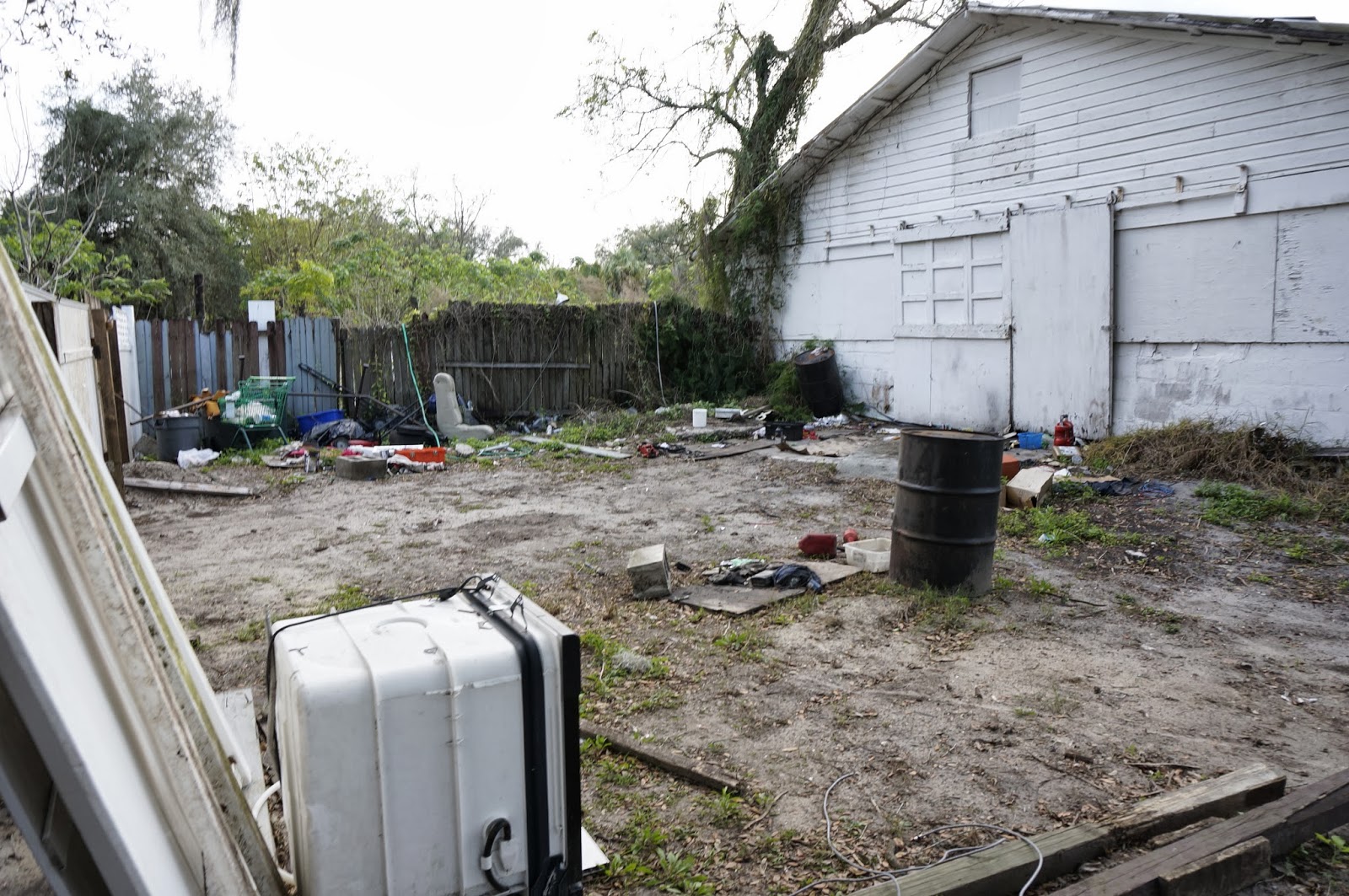
New Camera& a trip to the Landfill

Everyone I have been talking to, meeting, and getting advice from, told me I needed to:
-Invest in a good camera
-Add more pictures to my blog
-Take more of my own pictures!!

So...What did I do?
I got myself a SONY NEX6. It's a beauty.
To test it out, I decided to go to a landfill. After doing some research, I discovered there are quite a few of them located around Tampa; there's about 10 of them. In order to find them, it depends on the name you use to look them up.
-Landfill
-Dump
-Trash Dump
-Disposal
-Waste Solution
-Waste Disposal
-etc...

The closest one I found was one located about 5KM. When I got there, I was confronted by Felix, the "Black guy who watches"(this is how he introduced himself to me, very sweet gentlemen), that the land was private property and we were not allowed to go passed the gates.

I am not going to lie to you, I tried convincing him that this was for a project, and a good cause; I was even able to get the owner, George Coniglio's cell number, to ask his permission, but in the end I was told the property was closed off, had been sold to the government and is currently under construction.

So I took pictures of its surrounding instead. And to be honest, what I discovered and the pictures I was able to capture were beyond what I had imagined....

These are unedited, if you were wondering. 

Take a look:


I admit it, I'm no photographer. But for a first timer, and a test run with my new camera...
I think I did alright. No?

Saturday, January 11, 2014

An Academic Award Winning Documentary: Wasteland

Vik Muniz
 
    For those with a Netflix account and think you have seen it all, add Wasteland to your Need-to-Watch List. It's free!

Words cannot describe how amazing artist Vik Muniz. 
Born in Sao Paulo, Brazil, in 1961. At a young age, he was shot in the leg after trying to break up a fight. He received compensation for the injuries and chose to use the money to fund a trip to New York City. He ended up working there until the late 1980's. He started his career as a sculpture, and later on developed a passion towards photography. 

"...Vik has used dirt, diamonds, sugar, string, chocolate syrup and garbage to create bold, witty and often deceiving images drawn from the pages of photojournalism and art history. His work has been met with both commercial success and critical acclaim, and has been exhibited worldwide. His solo show at MAM in Rio de Janeiro was second only to Picasso in attendance records; it was here that Vik first exhibited his “Pictures of Garbage Series” in Brazil."
-Waste Land Movie
The documentary Waste Land was filmed for over three years. The film follows artist, Vik Muniz, in his journey of returning back to his native country, Brazil, to visit the World's largest landfill located on the outer part of Rio de Janeiro, Jardim Gramacho. Once there, he begins photographing "catadores"- Recyclable Material Collectors. He tells each Catadores he photographs, all proceeds made from these work of art will be there's to keep. The beauty of this film is within each individuals, their story, and their view of the world. Vik Muniz not only became a part of their world, he helped them and created a film that is simply poetic and magical. 


Valter: [talking about the importance of recycling] People sometimes say "But one single can?" One single can is of great importance. Because 99 is not 100, and that single one will make the difference. 

Vik Muniz: I'd rather want everything and have nothing, than have everything and want nothing. Because at least when you want something your life has a meaning: it's worthwhile. From the moment you think you have everything, you have to search for meaning in other things. I spent half my life wanting everything and having nothing; and now I have everything and I don't want anything.    

If, after reading this, you still have doubts on whether or not you wish to view this film....take a peek of the trailer:

http://www.youtube.com/watch?v=sNlwh8vT2NU

How did you enjoy the documentary? What did you get out of it?
Does the artist's work resonate with any important cultural concerns in today's society?


Monday, January 6, 2014

Interview with MSLK


My first victim.... I mean Interviewee!

I called Marc S Levitt from the MSLK Design Agency after seeing their recent plastic intervention project.

For those who do not know about MSLK, I highly recommend visiting their webpage (link is below)
http://mslk.com/


Our conversation was short but informative!
Mark expressed he agreed with what Plastic Continents entails and wished to speak more about what my goals were about.

To be continued...

Friday, January 3, 2014

2014 Goals

So

because this is a new year, things are going to move very quickly. 

I need to get Plastic Continents going, and moving.
I will be interviewing 10 people by then end of February.
I have prepared some questions for these individuals, and will post each interview on the blog.
The people I will be interviewing are the following(order is not relevant):
-Kevin Costner
-Lady Gaga
-Metabolix
-NatureWorks
-Cereplast
-BP Headquarters
-Nalco Holding Company- Corexit oil
-Econyl
-Waste Management Headquarters
-INCOM

It's a pretty big List.
It's going to be a very busy two months.

A New Year, New Ideas

I hope you had a wonderful Holiday and New Year!

I've had this idea for some time now and have decided to share it with you.

It's a machine I have not yet named, but for now we can call it: R4C (Recycle for Coupons)

Basically its a vending machine that would accept plastic bottles and plastic bags, or any other plastic object; it would then crush/compact it; weigh the weight of the compact plastic; and would then print coupons or a card with an equivalent credit for that store.

Each store could program their own R4C. The coupons could also be associated with Groupon, or site like it.

You could maybe also have an option for a reward/point system. And could accumulate points to then receive some sort of reward. Recycling should be not only fun, but also have some sort of recompense towards the individual who is helping make a difference.

Those who live on the streets could also have an incentive in earning points for food, clothes, etc...
They earn 5-10 cents for each can they bring in, plastic bottles or bags should also have some sort of value.

By giving it a value, people would think twice about discarding it.
I'm telling you. I think this is the Future!

Monday, December 9, 2013

How stuff works gets involved!

How long does it take for plastics to biodegrade?

"Drop a ketchup bottle on the floor, and you'll be thankful for polyethylene terephthalate, or PET, the nearly indestructible plastic used to make most containers and bottles. Drop the same bottle into a landfill, however, and you might have second thoughts. Why? Because petroleum-based plastics like PET don't decompose the same way organic material does. Wood, grass and food scraps undergo a process known as biodegradation when they're buried, which is a fancy way of saying they're transformed by bacteria in the soil into other useful compounds. But bacteria turn up their noses at plastic. Load their dinner plates with some plastic bags and bottles, and the one-celled gluttons will skip the meal entirely.
Based on this logic, it's safe to argue that plastic will never biodegrade. Of course, that's not the end of the story. Daniel Burd, a student at Waterloo Collegiate Institute, recently demonstrated that certain types of bacteria can break down plastic. His research earned the top prize at the Canada-wide Science Fair, earning him $10,000 cash and a $20,000 scholarship [source: Kawawada].
Until other researchers can replicate Burd's experiment and waste treatment plants can implement any new processes, the only real way to break down plastic is through photodegradation. This kind of decomposition requires sunlight, not bacteria. When UV rays strike plastic, they break the bonds holding the long molecular chain together. Over time, this can turn a big piece of plastic into lots of little pieces.
Of course, plastic buried in a landfill rarely sees the light of day. But in the ocean, which is where a lot of discarded grocery bags, soft drink bottles and six-pack rings end up, plastic is bathed in as much light as water. In 2009, researchers from Nihon University in Chiba, Japan, found that plastic in warm ocean water can degrade in as little as a year. This doesn't sound so bad until you realize those small bits of plastic are toxic chemicals such as bisphenol A (BPA) and PS oligomer. These end up in the guts of animals or wash up on shorelines, where humans are most likely to come into direct contact with the toxins.
One solution to this environmental disaster is biodegradable plastic. There are two types currently on the market -- plant-based hydro-biodegradable plastic and petroleum-based oxo-biodegradable plastic. In the former category, polylactic acid (PLA), a plastic made from corn, tops the list as the most talked-about alternative. PLA decomposes into water and carbon dioxide in 47 to 90 days -- four times faster than a PET-based bag floating in the ocean. But conditions have to be just right to achieve these kinds of results. PLA breaks down most efficiently in commercial composting facilities at high temperatures. When buried in a landfill, a plastic bag made from corn may remain intact just as long as a plastic bag made from oil or natural gas.
 Keep reading for more links you might like on plastics."

http://science.howstuffworks.com/science-vs-myth/everyday-myths/how-long-does-it-take-for-plastics-to-biodegrade1.htm

What is corn plastic?

"
For years, the corncob pipe was a fashion accessory best left to hillbillies, Frosty the Snowman and Gen. Douglas MacArthur. While the look is no less bumpkinish today than it ever was, corn is showing up in the production of more everyday items -- and without resembling a prop from "Hee Haw." What looks like normal oil-based plastic at first glance is actually polylactic acid (PLA) plastic made from specially processed crops.
That's right: corn plastic. You can drink coffee out of it, put groceries in it, wear it and even hang ten on it on a corn plastic surfboard. Most important, you can turn corn into plastic and avoid dependency on petroleum. Much like corn ethanol, corn plastic allows us to make a comparable product out of a renewable resource, as opposed to oil reserves that will one day run dry. In addition, since corn can be cultivated throughout the world, market value doesn't hinge on relationships with oil-rich nations or on peace in the Middle East. After all, have you ever seen "No blood for corn" printed on a T-shirt?
The United States uses 20.8 million barrels of oil per day, 10 percent of which goes solely to the production of conventional plastic such as polyethylene terephthalate (PET) [sources: CIA World Factbook, Jewell]. Bioplastics like corn plastic, however, don't require oil and, as a bonus, their manufacture releases fewer toxins and greenhouse gases.
­Plus, while normal plastic has a nasty habit of sticking around for centuries after disposal, corn plastic boasts the ability to biodegrade in mere months. Moreover, should you choose to burn it, you don't have to worry about creating toxic fumes.
In this article, we'll look at how a corn stalk turns into a plastic garbage can and why some critics aren't convinced that bioplastics are necessarily a godsend.

Bioplastics: The Pros and Cons

Globally, bioplastics make up nearly 331,000 tons (300,000 metric tons) of the plastics market [source: European Bioplastics]. That may sound like a lot, but it only accounts for less than 1 percent of the 200 million tons (181 million metric tons) of synthetic plastics the world produces each year [source: Green Council]. Still, the bioplastics market is growing by 20 to 30 percent each year, but not everyone's pleased [source: Vidal].
­What could be wrong with a renewable resource you grow in a field and compost when you're done with it? As it turns out, several things. For one, corn plastic only composts in the hot, moist settings of a commercial composting facility. Simply throw a corn plastic product out of your car or bury it in a backyard-composting heap and the material will stand the test of time just as regular PET plastics will.
If commercial composting isn't available, PLA plastics can wind up following conventional plastics into the landfill or into plastic recycling programs. What's wrong with putting corn plastics in your recycling bin? To the uninformed eye, one may look very much like the other, but their chemical composition is very different. In fact, a relatively small amount of bioplastic can contaminate conventional plastic recycling, preventing the salvaged plastic from being reused and stopping recycling companies from profiting from one of their more lucrative recyclables.
Due to these dangers, companies like NatureWorks are treading carefully, introducing corn plastic products slowly and communicating with commercial recyclers to spot contamination early. Bioplastics manufacturers insist that the threat is overblown and that recycling remains a better option than composting for PLAs such as corn plastic, since it makes up such a small percent of the current plastics market. In addition, since PLA plastics produce the greenhouse gas methane when they decompose, composting isn't a perfect disposal method. On the other hand, if incinerated, bioplastics don't emit toxic fumes like their oil-based counterparts.
To avoid the complications of mixed plastics, commercial composters in the Northwestern United States only accept bioplastics from food service operations, not households. This approach means that bioplastics could conceivably be used to great effect at sports games and other events where foods are purchased and consumed on the premises in bulk.
As with corn ethanol, corn plastic has also drawn criticism for depending on the industrial farming of large fields of crops. These fields could otherwise be used to grow food for an ever-rising global population. Much of the corn used for bioplastics is a variety called Number 2 Yellow Dent that's used mostly for animal feed. In addition, some of this corn used has been genetically modified. Nevertheless, even if genetically modified corn was used to make your plastic water bottle, NatureWorks insists that you don't have to worry about consuming modified proteins, as these are destroyed in the transformation from plant to PLA plastic [source: Jewell].
Advocates also stress that the bioplastics industry is in its infancy, with long-term plans of being able to depend exclusively on agricultural waste (such as stems and stalks) for production. Such plans are also mentioned in defense of the higher costs associated with bioplastics research and production. PET plastics are a mature commodity, with years of production fine-tuning behind it. Bioplastics advocates argue that, in time, PLA costs will go down, all while petroleum-based plastics costs continue to fluctuate due to unstable production regions and dwindling resources.
Explore the links on the next page to learn even more about plastics, corn, biofuel and recycling.

http://science.howstuffworks.com/environmental/green-science/corn-plastic3.htm